Tree Removal In Toronto
Safe, Clean Tree Removal Done Right The First Time
Proudly Serving Toronto, Etobicoke, Mississauga, Scarborough, Oakville, Vaughan, Richmond Hill, Markham
Toronto's Private Tree Bylaw: What Every Homeowner Needs to Know
How the 30 cm Diameter Rule Affects Tree Removal on Your Property
Toronto’s Private Tree Bylaw protects trees on private property with a trunk diameter of 30 cm or more, measured at 1.4 metres above ground. If you’re planning any tree removal in Toronto, that measurement determines whether you need a permit before you make a single cut.
City of Toronto Urban Forestry enforces this bylaw, and they take it seriously. In established neighbourhoods like Rosedale and the Annex, bylaw compliance is closely watched because mature tree canopy cover on private lots is dense and regulated. Removing a protected tree without a Tree Removal Permit in Toronto can result in significant fines.
If you’re unsure whether your tree meets the 30 cm diameter threshold, an Arborist Report can confirm it. That report also supports your permit application and gives Urban Forestry the documentation they need to process your request.
Tree Removal on Private Property doesn’t have to be complicated. Knowing the bylaw upfront means no surprises, no fines, and no delays once work begins.
Ask Us About Our Tree Removal Service
A Leaning Tree Isn't Always an Emergency. But Here's How to Tell the Difference
Signs That Indicate a Tree Actually Needs to Come Down
Most people assume a leaning or visually off-putting tree needs to come down right away. That’s not always true. Some trees have leaned for years without any structural risk, and issues like crown imbalance or minor deadwood are often manageable with crown reduction or cabling and bracing rather than full removal.
The right first step is a formal tree risk assessment. This gives you an honest picture of what’s actually going on before you make any decisions. If you’re near the Humber River valley, root system stability adds another layer of complexity, since slope conditions and soil movement can affect how a tree anchors itself over time.
Some signs do point clearly toward removal. Tree root instability, significant structural tree damage at the base or major limbs, or a confirmed Emerald Ash Borer infestation that has progressed too far are all indicators a tree may be a genuine hazard. Dead tree removal is typically more straightforward, but even then, a tree health assessment confirms the right course of action.
What ISA Certification Means for Your Tree Removal in Toronto
ISA Certified Arborist status is not just a title on a business card. It is the qualification required to produce a legally recognized Arborist Report. Without a certified arborist producing that report, your permit application goes nowhere.
If you live where large mature trees are common, and bylaw compliance is closely watched, this matters more than most people expect. An unlicensed crew cannot prepare that report or guide you through the permit process. They can only show up with equipment.
Certification also means species-specific knowledge. Toronto’s urban canopy includes a wide range of tree species, and decisions about how to safely remove a tree depend on root structure, crown weight, and site conditions. That kind of assessment requires training, not just experience.
What Actually Happens When White Glove Removes a Tree From Your Property
From First Assessment to Final Cleanup: The Removal Process Explained
Every removal starts with a site walkthrough. The crew checks access points, overhead lines, nearby structures, and the tree’s condition. If you’ve got a storm-damaged tree with hanging branches, that assessment shapes the entire approach before a single cut is made.
Property protection comes next. We mark drop zones, stage equipment carefully, and lay down ground protection where needed. On tighter lots near High Park, where houses sit close together and yards are compact, that planning step matters more than most people expect.
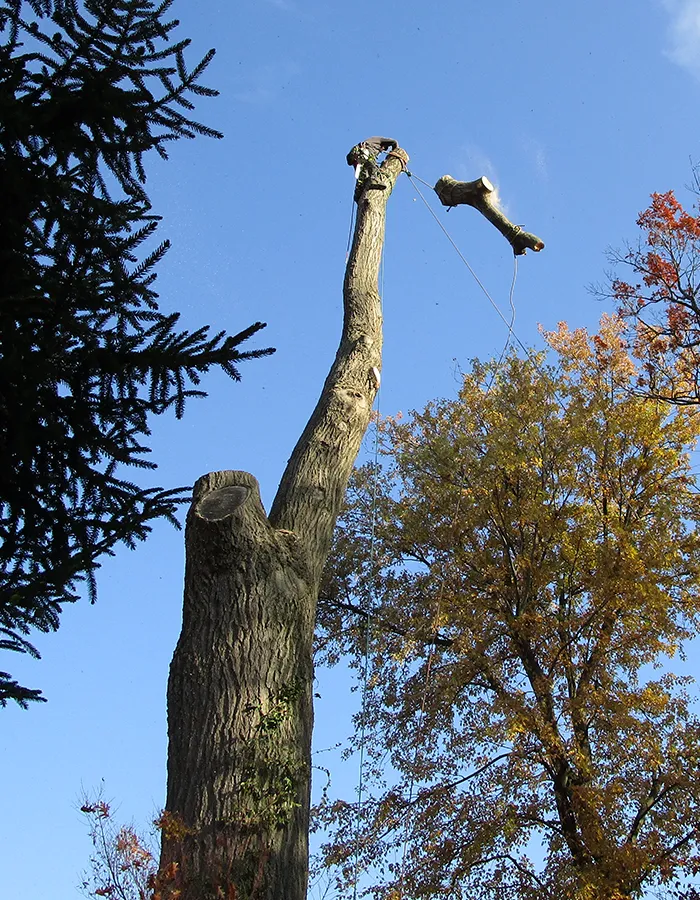
Then the actual removal begins. For large tree removal, the tree comes down in sections from the top, not all at once. Fallen tree removal and storm damage tree removal follow the same controlled process, even when the situation feels urgent. Emergency tree removal uses the same careful sequencing.
Debris gets chipped or hauled away as work progresses. You won’t be left with a pile of logs at the end of the day. Site cleanup after tree removal is part of the job, not an add-on.
Tree Removal
Safe efficient removals
Precision Pruning
Improve structure, safety, and tree health
Tree Trimming
For beautiful, healthy trees
Emergency Tree Services
Emergency tree services to keep you safe
Stump Grinding
Stump grinding for a usable landscape
Deep Root Fertilization
Fertilization for long-term tree health
Plant Health Care
Plant health care for strong, resilient trees
Arborist Consultation
Professional tree health evaluations
Tree Protection Zoning
Tree Protection Before You Break Ground
The Longer a Problem Tree Sits, the Fewer Options You Have
What Changes When Tree Removal Is Addressed Early Versus Later
Getting a tree health assessment early keeps more doors open. A certified arborist might find that what looks like a dying tree is actually a candidate for Deep Root Fertilization, targeted Tree Pruning, or a Plant Health Care program. Those options exist when the tree still has enough structural integrity and root health to respond to treatment.
Wait too long, and the picture changes. Deadwood removal that could have been routine becomes urgent. A tree that might have been saved through tree fertilization or corrective pruning now needs to come down. The removal itself can also become more complex when decay has progressed, which affects access, rigging, and the care needed around nearby structures.
If you live where mature trees sit close to homes and fences, this gap between early and late assessment is especially noticeable. A tree inspection done before significant decline sets in gives you real information and real choices.
ISA-Certified Arborists